I’ve spent years teaching players about what actually happens behind the flashing lights and spinning reels, and the single most important concept in any casino is the house edge. Joining an online platform without understanding odds is like driving with a blindfold on — you might get lucky for a while, but eventually the mathematics catches up. Here in the UK, where the Gambling Commission enforces strict transparency, players have a genuine advantage in being able to access clear information about return-to-player percentages. Duel Casino operates within this regulated framework, which means the numbers I discuss in this guide directly shape the experience you’ll find when you log in. What fascinates me most is how a tiny shift in probability — moving from one bet type to another on the exact same table — can dramatically alter your expected results over an evening. By the time you finish reading, you’ll possess a practical understanding of odds that puts you firmly in control, whether you prefer spinning slots, sitting at a live blackjack table, or placing a strategic bet on the roulette wheel.
The reason the House Edge Is More Important Than You Think
A lot of newcomers fixate on bonuses and eye-catching promotions, but I always direct the conversation to the house edge as it’s the quiet force determining every outcome. The house edge is the numerical advantage the casino possesses in any given game, expressed as a percentage of your wager that the house expects to retain over the long run. When I mention “long run,” I’m talking about thousands or millions of rounds, not a single session — which is precisely why short-term wins stay entirely possible. A game with a 2 percent house edge means that, statistically, you’ll give up an average of £2 for every £100 you wager. That seems gentle, and it remains accurate when measured to games where the edge climbs above 5 percent. The essential insight I want to convey is that the house edge varies enormously between game categories and even between different bets within the same game. At Duel Casino, you can transition from a slot with a 96 percent return-to-player rate — suggesting a 4 percent house edge — to a blackjack table where perfect basic strategy lowers the edge below 1 percent. Comprehending this spread provides you true agency: you’re not just hoping for luck, you’re picking the mathematical landscape on which luck develops.
What turns the house edge actionable insight is how it interacts with real-world session lengths. Consider you begin with £200 and play slots averaging a 4 percent edge, wagering roughly £1,000 in total bets over two hours. Your expected loss comes to £40, giving you a fair chance of ending up with something in your pocket. Now consider the same session on a game with an 8 percent edge — your expected loss climbs to £80, severely reducing your staying power. I’ve observed players unwittingly exhaust their bankroll because they never reviewed the RTP of the title they were playing. The UK gambling market renders this information easier to find than many jurisdictions, with most reputable operators openly showing RTP figures in the game information section. I make it a practice to verify these numbers before committing real money, and I advise you do the same. It converts the experience from blind gambling into informed entertainment where you know the cost of the ride you’re taking.
A further dimension to consider is how the house edge converts to volatility — the short-term variance that generates winning and losing streaks. A low house edge coupled with high volatility can still produce wild swings, which is why progressive jackpot slots continue to be so seductive despite sometimes having less favourable base-game RTPs. The massive top prizes change the expected value calculation, but only for the tiny fraction of players who hit them. For the vast majority, the experience is shaped by the base-game edge. I view it helpful to think of the house edge as the admission fee for the entertainment, while volatility decides whether you’re on a gentle carousel or a rollercoaster. UK players using Duel Casino can apply responsible gaming tools like deposit limits and reality checks to ensure the volatility never becomes overwhelming, no matter which game style they choose. The bottom line is simple: knowing the house edge doesn’t guarantee you’ll win, but it almost certainly guarantees you’ll make smarter choices about where and how you play.
Roulette Wheel Facts: European vs. American
Roulette seems deceptively consistent — a spinning wheel, a bouncing ball, a felt layout — but the difference between types can be as stark as day and night for your expected returns. European roulette has a single zero pocket, offering the house an edge of 2.7 percent on all bets except one. American roulette adds a double zero pocket, instantly raising the house edge to 5.26 percent. That’s nearly double, and I’ve witnessed players casually navigate into an American wheel without understanding they’re subjecting themselves to a mathematical disadvantage that will accumulate over the course of a session. Whenever I scan the live casino lobby at Duel Casino, I actively seek out the European single-zero wheels, and I’ll only choose American variants if no European table is present and I’m content to accept the steeper cost of entertainment. French roulette merits its own mention because the “La Partage” or “En Prison” rules — offered on some French tables — lower the house edge on even-money bets to 1.35 percent when the ball lands on zero. That’s an exceptional deal by roulette standards, and UK players who prefer outside bets like red/black or odd/even should favour French roulette tables whenever possible.
The idea of independent trials governs roulette thinking, and I come across persistent myths among players who believe past spins impact future results. A roulette wheel has no memory, and the ball doesn’t “owe” you a red after a streak of blacks. Each spin is an isolated event controlled by the same fixed probabilities. The statistics are clear: the probability of the ball landing on any specific single number on a European wheel is 1 in 37, or approximately 2.7 percent, and that probability restarts identically with every fresh spin. Betting systems like Martingale — doubling your wager after a loss — can produce short-term winning streaks, but they do not alter the underlying house edge one iota. The danger is that a prolonged losing streak, which is statistically inevitable given enough spins, can exhaust your bankroll or hit the table limit before you recover. My advice is simple: savor the elegance of roulette, value the social atmosphere of the live dealer setting, and bet amounts that wouldn’t upset you to lose on a single spin, because the next number is always a fresh roll of the dice — or spin of the wheel, in this case.
Inside and Outside Bets and Their Payout Structures
Inside wagers — direct numbers, splits, streets, corners, and six-lines — offer higher payouts but smaller odds of succeeding on any given spin. A straight-up bet on a one number pays 35 to 1, yet the actual odds of prevailing on a European wheel are 36 to 1. That one-unit discrepancy is just where the house edge lives. External wagers — red/black, odd/even, high/low, dozens, and columns — return less but succeed more regularly, making them attractive for gamblers who prefer a steadier game flow with more frequent positive feedback. The dozen and column bets deserve a specific note because they pay 2 to 1 while carrying a probability of 12 in 37, or about 32.4 percent, on a European wheel. That finds a solid midpoint between the close-to-even outer bets and the volatile inner bets. I often build my roulette strategy around a mix of a steady external wager for continuous participation and a light touch of internal bets for the rare rush of a direct hit. This even strategy holds my interest in each spin without exposing my whole bankroll to the brutal variance of hunting single bets. The versatility of roulette is one of its enduring strengths — you can modify your risk level spin by spin without moving tables or games.
Twenty-One and the Pursuit of the Lowest House Edge
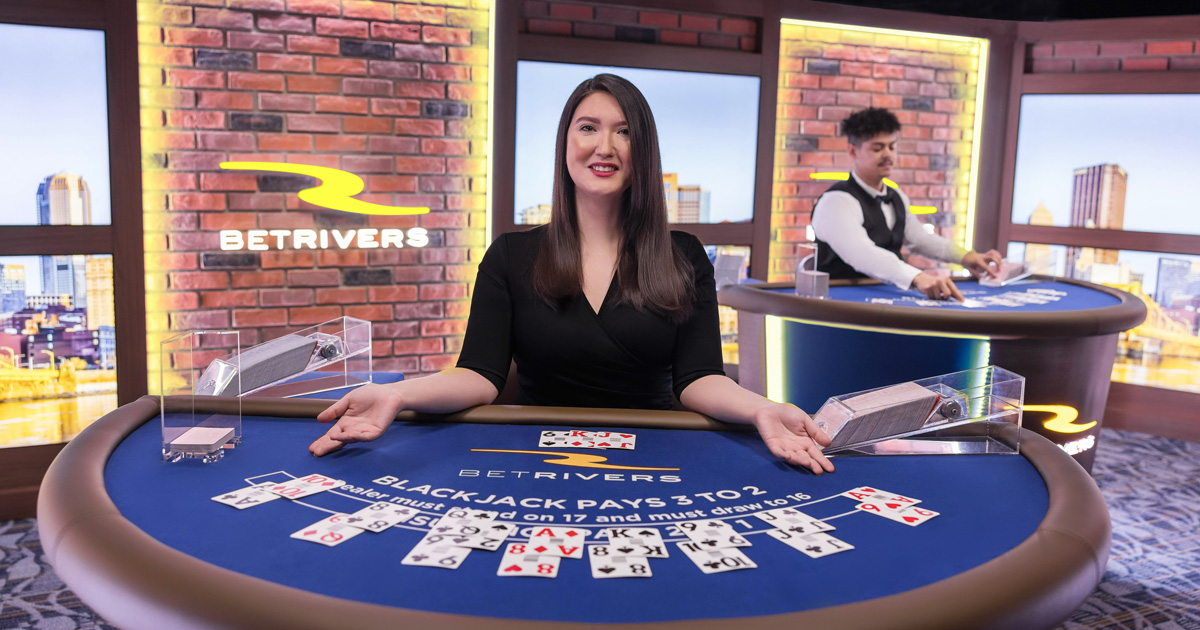
If you inquire of me which table game provides you with the fairest fight against the casino, I’ll always point to blackjack first. When played with optimal basic strategy — a mathematically derived set of decisions for every possible hand combination against the dealer’s upcard — the house edge can drop to around 0.5 percent on standard rulesets. That figure surprises people who’ve been conditioned to view casino games as stacked firmly in the house’s favour. The catch, and it is a significant one, is that you must actually apply that strategy consistently. see the full list Deviating from basic strategy, even on seemingly marginal hands like soft 18 against a dealer 9, directly boosts the house advantage. The beautiful part is that basic strategy isn’t secret knowledge reserved for card counters or professionals; it’s freely available in chart form, and many players maintain a strategy card nearby during online sessions where nobody monitors such aids. At live dealer blackjack tables hosted on Duel Casino, you can comfortably look at a chart without pressure, which I view as a genuine practical benefit of online play over brick-and-mortar venues.
Game variants between multiple blackjack tables can substantially shift the house edge, and I aim to give you the structure to judge them yourself. The number of decks is a simple factor: typically, fewer decks favour the player, all else being equal, because fewer decks boost the chance of drawing a natural blackjack. Payout ratios are even more impactful. The classic 3:2 payout on a natural blackjack provides significantly better value than the 6:5 variant that has appeared into some markets; the latter nearly multiplies the house edge on your most advantageous hand. I automatically avoid 6:5 tables and advise you to do the same, as the degradation in expected return is substantial. Other rule tweaks, such as whether the dealer stands or hits on soft 17, whether doubling after splitting is authorized, and the presence of surrender, each change the edge by fractions of a percent that build up in meaningful ways. The total house edge on a player-friendly blackjack game at a licensed UK casino can fall below 0.4 percent, rendering it one of the best wagers in the entire gambling ecosystem.
Side Bets and Why They Change the Calculation
Many contemporary blackjack tables, including those in the live casino section, provide enticing side bets like Perfect Pairs, 21+3, or Lucky Ladies. I must be straightforward about these: they almost universally carry a greater house edge than the main blackjack hand, often substantially so. A Perfect Pairs bet may hit a house edge of 4 to 10 percent according to the specific paytable, which undermines the mathematical advantage you’ve built by sticking religiously to basic strategy on the main hand. Side bets are fundamentally mini-games with their own probability distributions, and while the payouts can be exciting — hitting a suited pair or a flush-based poker combination — the price you pay is a much steeper statistical disadvantage. My personal guideline is to treat side bets as an extra flavor: a pound or two for the thrill if you genuinely enjoy the suspense, but by no means a core component of your wagering. Placing the minimum on a side bet while keeping the bulk of your stake on the main hand is a reasonable compromise if you find the added layers amusing. The key is understanding. Once you know the house edge on a Perfect Pairs wager stands at 6 percent, you’re making an knowledgeable choice rather than being surprised by the math.
Slot Probabilities and The Truth About RTP
Slots fill the halls of virtually every online casino serving UK players, and I totally appreciate the appeal — the quick feedback, the theme-based immersion, the possibility of life-changing jackpots. But I intend to demystify the numbers so you approach each spin with open eyes. Return-to-player, commonly abbreviated as RTP, is the percentage of total wagers a slot is set to return to players over its duration, which often spans millions of spins. If a game features 96 percent RTP, it does not mean you individually will get £96 back from every £100 you put in. It means the game’s software has been tested and approved to pay that share across all players and all sessions together. Your individual session could experience zero return or a 500 percent return, and both outcomes are compatible with the advertised RTP over a small sample. I often compare it to flipping a coin: the ultimate probability of heads is 50 percent, but getting ten heads in a row is completely possible and reveals nothing about future flips.
The practical question players frequently ask me is how to identify and decipher RTP figures when exploring the Duel Casino game library. Most established software providers — NetEnt, Play’n GO, Pragmatic Play, and other names you’ll encounter — include the RTP information directly in the game’s paytable or rules menu. I press the information icon on any unknown title before playing, and I advise you turn it into a five-second habit. Standard RTP ranges for modern video slots fall between 94 and 97 percent, with anything above 96 percent landing in what I regard as the “player-friendly” zone. Below 94 percent, you’re incurring a steeper entertainment premium. One nuance worth mentioning: some slots feature variable RTP settings, meaning the operator can theoretically choose between different configurations. UK Gambling Commission regulations mandate transparency here, and Duel Casino, working under a valid licence, must adhere to these standards. If RTP isn’t directly shown in the game, the support team should be able to point you toward it.
What RTP alone cannot tell you is the volatility profile of a slot, which is why I advise paying attention to the maximum win potential and the hit frequency when these details are available duelscasino.eu. A high-RTP slot with extreme volatility could consume your entire session bankroll during a long dry spell before a big bonus round saves the evening. A slightly lower-RTP game with high hit frequency can offer a smoother, more sustained experience that seems satisfying even without a massive multiplier. Neither design is objectively superior — it hinges completely on what you’re seeking. My approach is to mix both types deliberately, allocating a fixed portion of my bankroll to the steady grinders and a smaller slice to the high-risk thrillers. This portfolio mentality converts slot play from pure chance into a managed entertainment exercise. Here are the key factors I weigh when selecting a slot:
- RTP percentage: I seek 96 percent or above for my primary session, keeping lower-RTP games for brief, budgeted ventures where the design or features really thrill me.
- Volatility rating: Providers often label games as low, medium, or high volatility. I align this to my session goal — longevity versus the chase for a big multiplier.
- Hit frequency: This tells me how often a spin produces any win at all. A 30 percent hit rate means nearly one in three spins delivers something, which makes the session feeling active.
- Maximum win cap: Knowing the ceiling helps me set realistic expectations. A 5,000x max win is exciting but astronomically rare, and I never hunt it as a guaranteed outcome.
Live Casino Probabilities and the Human Element
Real-time dealer games have changed the online casino experience by merging the convenience of digital access with the tactile authenticity of a real table, and I view the odds dynamics especially fascinating because they usually match their land-based counterparts exactly. The shuffle is real, the wheel is physical, and the card draw occurs in real time under the watchful eye of multiple cameras and regulatory oversight. The house edge on live blackjack, when played optimally, remains in that sub-1 percent realm I described earlier. Live roulette operates on the same mathematical principles — you’re still looking at 2.7 percent on single-zero wheels — but the game pace is generally slower than automated digital roulette, which means your hourly expected loss can actually decrease simply because you’re playing fewer spins. I regard this an underappreciated advantage of the live format: a more social, leisurely rhythm that naturally moderates wagering velocity. At Duel Casino, the live lobby typically includes offerings from Evolution Gaming and other leading providers whose studios operate reddit.com under strict UK Gambling Commission standards, ensuring the randomness of outcomes is beyond reproach.
Game shows and hybrid live games — titles like Crazy Time, Monopoly Live, or Deal or No Deal — have introduced a casino floor dimension that lies somewhere between slots and table games in terms of odds architecture. These games often offer a base component with a fair RTP, frequently between 95 and 97 percent, complemented by bonus rounds with high multipliers that generate much of the excitement. The house edge on the base spinning wheel might be moderate, but the real mathematical action takes place in the distribution of those bonus triggers and the weighted probabilities within the bonus rounds themselves. I’ve reviewed the published RTP documents for several of these titles, and the returns can be remarkably competitive with traditional slots, provided you factor in the full feature cycle. The advice I offer is the same as for any game: find the RTP information, recognize that the top multiplier screens you see in promotional clips are astronomically rare, and enjoy these titles for the entertainment value of the host interaction and the communal chat atmosphere rather than as a get-rich pathway. The live format adds authentic value through immersion that numbers alone cannot capture, but the numbers still matter immensely for your bottom line.
Handling Your Bankroll From the Perspective of Mathematics
Grasping odds is crucial, but using that knowledge to how you really manage your money is what distinguishes a enjoyable evening from a unpleasant one. I view bankroll management as the functional bridge between theoretical probability and actual behaviour. The first guideline I live by is unit sizing: setting a base bet amount that constitutes a tiny fraction of your total session bankroll, usually between 1 and 2 percent. If I’ve allocated £300 for an evening, my base unit is roughly £3 to £6, which gives me enough runway to absorb the natural variance of my selected games without being forced into reactive, oversized wagers. This percentage-based approach adapts naturally — whether your budget is £50 or £500, the principle remains valid. At Duel Casino, deposit tools let you to pre-commit to a limit before you begin, which I highly suggest setting the moment you log in. The house edge ignores your willpower, but pre-set limits establish a mechanical backstop that blocks the emotional override that can take place after a few unlucky spins.
Chronological strategies enhance stake-based strategies in ways I’ve found remarkably practical. Slots, especially the quick-spinning automated variety, can process several hundred rounds per hour, which multiplies the house edge’s effect relative to a slower-paced live dealer game. I intentionally pace myself, sometimes using a deliberate pause between spins or setting a phone timer to prompt a quick break every fifteen minutes. This straightforward habit disrupts the trance-like state that can lead to briefly abandoning your unit sizing discipline. Another technique involves session segmentation: divide your total bankroll into smaller, ring-fenced portions that you assign to individual game types. You might allocate 50 percent for a high-RTP slot you genuinely enjoy, 30 percent for a live blackjack session where your skill can directly influence the outcome, and 20 percent for an experimental dabble in a new game show title. This systematic allocation ensures that a cold streak in one segment doesn’t affect the entire evening, and it fosters deliberate choices rather than impulsive game-hopping. The psychological benefit is real — you feel in command of your session architecture, which bolsters positive decision-making.
Payment Methods and Payout Timing as Bankroll Extensions
Deposit and withdrawal methods and settlement periods might appear as a technical afterthought, but I view them essential for the bankroll discussion because the pace of fund availability directly affects your capability to adhere to your plan. Duel Casino offers a variety of UK-friendly payment options including debit cards, e-wallets like PayPal and Skrill, and bank transfers. The withdrawal handling time differs depending on the method: e-wallets usually complete within hours once authorized, while debit card withdrawals can need one to three business days, and bank transfers may stretch to three to five days. Why does this impact odds and bankroll? Because pending withdrawals that sit in limbo can tempt players to reverse the transaction and resume betting, a feature that some operators provide and that in almost all cases works against the player. I recommend selecting the fastest withdrawal method at your disposal — generally an e-wallet — and then establishing a firm mental commitment that once a withdrawal is initiated, those funds have been removed from your gambling budget. The house edge has previously made its theoretical effect on your session, and securing winnings quickly is the most effective way to lock in a favourable result.
Choosing the Site That Acknowledges Your Knowledge of Odds
Armed with the awareness of house edges, RTP percentages, and game-specific strategies, you turn into a more astute player who judges a casino platform on more than just the welcome offer. I look for transparency: a casino that makes RTP figures easy to find, provides clear rules for each table variant, and prominently displays its licensing credentials. Duel Casino operates under a regulatory framework that requires fairness testing of its games, which indicates the random number generators and return percentages have been verified by third parties. For UK players, this assurance is not a luxury — it’s a baseline expectation upheld by the Gambling Commission, and any platform worth your time will state its licence information plainly in the website footer. The game selection by itself tells a story: a strong library featuring titles from well-known providers like NetEnt, Microgaming, Evolution, and Play’n GO typically suggests a platform dedicated to quality and compliance, since these studios abide by stringent certification standards across multiple jurisdictions.
Beyond the figures, I prioritise features that encourage informed play. Deposit limit features, reality check alerts, session history availability, and simple self-exclusion choices are not simply regulatory checkboxes — they are practical mechanisms that supplement the mathematical awareness you’ve acquired. The mobile platform matters significantly because an growing number of UK players, myself included, opt to play on smartphones or tablets. A platform optimized for mobile without sacrificing features means you can view a game’s RTP, set a time limit, and modify your stake just as simply on a small screen as on a desktop. Duel Casino’s mobile site is built to provide full functionality without needing a separate app download, which keeps things seamless. Here’s a quick rundown I review before dedicating to any session:
- Confirm the RTP: I view the game info panel and verify the return percentage is at or above my personal threshold for that game type.
- Examine the table rules: For blackjack, I verify 3:2 payouts and dealer stands on soft 17. For roulette, I make sure I’m on a single-zero wheel.
- Set my deposit limit: I utilize the responsible gaming tools to establish my session budget before the first spin or hand.
- Pick my withdrawal method: I confirm my preferred fast-payout e-wallet is selected so winnings can be collected without delay.
- Turn on reality check: I schedule a 30-minute reminder to step back, evaluate my balance, and decide whether to continue or walk away.
The mix of robust mobile support, transparent odds information, and responsible gaming tools creates an environment where your understanding of probability can genuinely guide your experience rather than being overwhelmed by flashy marketing. When you log into a session knowing exactly what edge you’re facing and exactly how much you’re willing to risk, you transform from a passive participant into an active, intentional player — and that shift is the entire point of the knowledge this guide has worked to build. Take that understanding into your next session, start with the games that offer the mathematical advantage you’re seeking, and let probability work in the background while you focus on the entertainment you came for. The house will always have its edge, but you now possess the tools to choose which edge you face and how long you dance with it.